How to Start a Cleaning Business: Real Numbers
Real costs, timeline, and mistakes from 8 years running a cleaning business. Learn when to hire, when to raise prices, and why starting slow is actually good.
Chris Wilson
Most "how to start a cleaning business" guides are written by people who have never run one. They tell you to buy a mop, make a website, and watch the money roll in.
Here's what actually happens: you start with three clients, your spouse does most of the cleaning, and you spend two years wondering if this is a real business or just a side hustle with extra steps.
I'm Chris Wilson. My wife Macy started Gem City Cleaning Crew eight years ago in Dayton, Ohio. We now have 10 employees, 150+ active clients, and handle 14-18 appointments per day. I also built the software we use to run it because nothing else solved the problems we actually had.
This is what starting a cleaning business really looks like—the costs, the timeline, the mistakes, and the moment you realize you either scale or stay stuck forever.
The Truth About Starting Costs (Spoiler: It's Lower Than You Think)
Here's the part that surprises people: starting a cleaning business is cheap.
You probably already own most of what you need. A vacuum, some rags, basic cleaning supplies. If you're starting solo or with a partner, your initial investment is shockingly low:
- LLC filing: ~$100
- Insurance: ~$50/month (non-negotiable, get this immediately)
- Basic supplies: You likely already have them
- Marketing: $0 if you start with referrals
That's it. No massive equipment purchases, no storefront lease, no inventory to finance.
The real cost isn't money—it's time and reputation.
You're trading your labor and reliability for clients who will (hopefully) refer you to others. That's the entire game at the beginning.
The Hidden Cost Nobody Talks About: Sales tax registration and quarterly filing. This blindsided us early. Make sure you understand your state's requirements before your first invoice goes out.
Year 1-2: The Slow Build (And Why That's Actually Good)
Macy started with three clients. Not 30. Not 300. Three.
She'd clean, do a great job, and slowly get referrals. One client became two. Two became five. Five became ten.
This took months. It felt painfully slow at the time, but looking back, the slow build is why we never lost money.
Here's why slow growth is a gift:
- You're not over-leveraged with employees you can't afford yet
- You learn pricing through real trial and error, not panic decisions
- You build a reputation before you have to scale
- You avoid the trap of paying for leads that don't convert
We got lucky by landing in a local Facebook group where Macy became the go-to cleaner. Every single day, someone would ask for a recommendation, and the group would swarm them like hawks demanding they call no one else.
That organic momentum is what made the business feel real. It took about two years before we filed the LLC and realized "okay, this is actually a business now, not just Macy cleaning houses."
The Expensive Mistakes We Made (So You Don't Have To)
Mistake #1: DIY Legal Documents
We made our own hiring agreements, client contracts, and non-solicitation clauses using free templates online.
Big mistake.
A cleaner quit, immediately stole several of our clients, and when I called a lawyer, I found out our non-solicitation wording wouldn't have held up in court. We had no recourse.
What I'd do differently: Pay a lawyer $800-$1,500 per document to get it done right the first time. Cover everything: equipment/supplies agreements, contractor vs employee distinctions, client contracts, and ironclad non-solicitation clauses.
I know lawyers get a bad reputation, but they see things you don't. They think about scenarios you haven't encountered yet. In this business, as you scale, there's something new every single day. Get ahead of it.
Don't use LegalZoom or online templates. Pay for a real consultation with a business attorney who understands employment law in your state.
Mistake #2: Underpricing at the Start (And Not Adjusting Fast Enough)
Macy started pricing cleans at $65. Way too low.
As she realized how much time some houses actually took—and how much we were paying employees—she raised prices. Again. And again.
Eventually, we learned a strategy that changed everything: raise prices during busy seasons when you can't take on more clients anyway.
Some clients stayed. Some didn't. The ones who stayed were worth more, and the ones who left made room for better-fit customers.
Current pricing: We price by room count, square footage, cleaning frequency, and whether they have pets. We really should add a "kids multiplier" because sometimes that's worse than pets.
We have strict minimums and we stick to them. Sometimes we add 15% on top just because we can.
It took years to refine this, but the formula works. Once you dial in your pricing structure, all houses start to look the same and you stop needing to do walkthroughs for every quote.
Mistake #3: Paying for Lead Generation Too Early
We didn't make this mistake—Macy was smart enough to avoid it—but I've watched dozens of cleaning businesses burn money on lead services like Bark, Angie's List, and others.
They all complain the leads aren't worth it.
Here's the secret I learned working behind the scenes at a cleaning business marketing agency: most business owners don't call the leads they're given. The agency delivers the lead, the owner is busy cleaning or managing the schedule, and the lead goes cold.
We eventually hired a marketing consultant who only charged us after the third clean from a client. That alignment of incentives made all the difference. He taught me how to market, and now I handle it myself.
The lesson: Don't pay for leads until you have someone whose actual job is to call them immediately.
The Moment Everything Changes: When You Stop Cleaning
There's a moment in every cleaning business where the owner has to make a decision: keep cleaning, or step back and focus on growth.
For me, it was a deep clean that felt like purgatory. It would never end. I had other things set up—sales processes, lead generation, scheduling systems—and I felt guilty not being in the field. But I looked at Macy and said: "This is my last house. I'm done cleaning. We're hiring someone to replace me."
At that point, we had about 5 cleaners and 120-130 clients. We were getting 5-10 leads per day and booking multiple quotes per week. I couldn't do both.
That's the threshold most people never cross. They stay in the work because it feels wrong to trust someone else with their clients.
But here's the reality: if you don't step out of the cleaning, you'll stay stuck.
The Mindset Shift That Matters: Your job is not to be the best cleaner. Your job is to build a system where great cleaning happens without you. Let your cleaners clean. You find the leads, close the sales, and build the infrastructure.
The Customer Reality Nobody Warns You About
Here's the part that's hard to hear: clients don't care about you.
Every cleaner starts this business with the highest standards. They think reputation is everything. And it is—but clients don't always respect that.
They'll cancel the day of the appointment. They'll reschedule at the last minute and make your life harder. They don't think about what that means to your schedule, your payroll, or your cleaners' livelihoods.
This isn't about being bitter—it's about being realistic.
The clients who value you will respect your time. The ones who don't will eventually filter themselves out, especially once you raise prices and enforce policies.
The business got easier when we stopped bending over backward for every client request. We set boundaries. We enforced minimums. We raised prices on difficult customers.
The right clients stayed. The wrong ones left. Revenue went up.
When You Actually Need Software (And Why We Built Our Own)
For the first few years, we used pen and paper. Then we found Zenmaid and fell in love.
Employees had their schedule on their phones. Clients got automatic reminders. We could move appointments around without texting everyone individually. It worked great for about 2.5-3 years.
But as we scaled, the cracks started showing:
- Double-booking issues: I'd accidentally book two people on one job and not realize it until someone showed up at the wrong house
- Availability blindness: Taking on new clients was painful because I couldn't see where availability gaps actually were
- Schedule overload: 18 appointments a day across multiple cleaners turned the calendar into an overwhelming mess. I'd stare at the screen for two hours and still be looking at the same week.
We also had a CRM with two sub-accounts (one for sales, one for current clients), QuickBooks for invoicing, a separate timeclock app, and Google Sheets connected via Zapier to generate the reports I actually needed.
My admin team was jumping between 14 different apps. It was unmanageable.
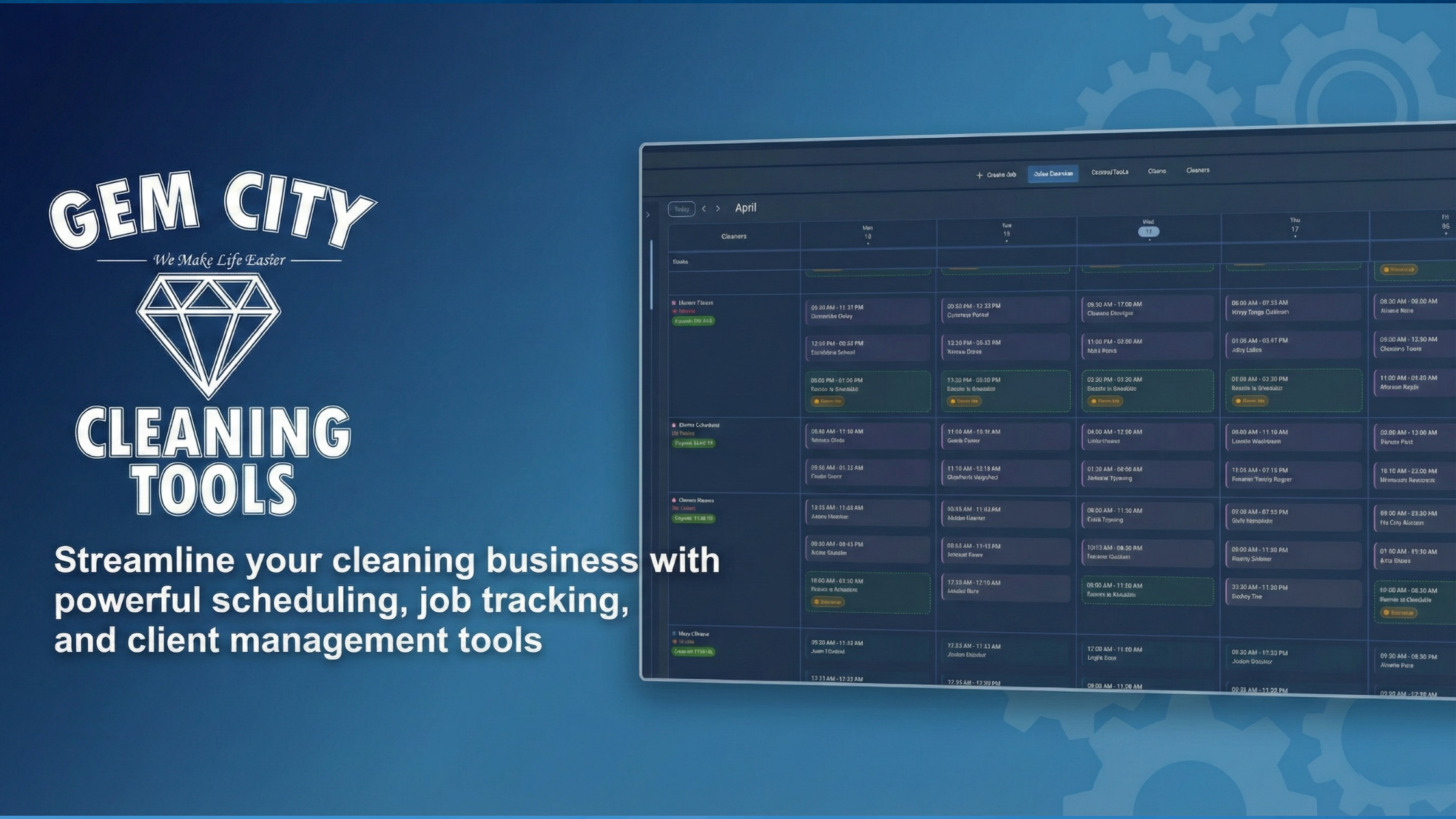
That's when I started building Gem City Cleaning Tools. Not because I wanted to build software, but because nothing on the market solved the problems we actually had:
- Seeing availability gaps and scheduling conflicts before they happened
- Tracking actual vs estimated hours to protect margins
- Monitoring gap time between jobs (the silent profit killer)
- Getting real-time visibility into efficiency and payroll costs
We've gotten it down to 2 apps now. I think we can get it to one.
The point: You don't need software on day one. But somewhere between 5 cleaners and 100 clients, manual scheduling breaks. Plan for it.
The Real Profit Numbers (After 8 Years)
People always ask: "How much do you actually make?"
Here's the honest breakdown:
- Gross profit per job (after labor and drive time): 40-50%
- Net profit (after all business expenses): 30-35%
That 10-15% gap is insurance, software, vehicle maintenance, marketing, admin payroll, and all the hidden costs that don't show up in the field.
If you're pricing jobs and expecting to keep 50% as take-home profit, you're going to be disappointed. The business has overhead. Budget for it.
What I'd Do Differently If I Started Over Today
Honestly? I wouldn't.
A cleaning business is hard. The residential side is especially challenging because there's not much infrastructure out there to help small teams grow. Every day brings something new—client drama, employee issues, scheduling headaches, equipment failures.
But if I had to start over, here's what I'd change:
-
Hire a lawyer immediately - Get real contracts, real non-solicitation agreements, and real employee documentation before you need them.
-
Stop cleaning sooner - The moment you have enough leads to justify a full-time salesperson (even if that's you), step out of the field. Hire someone to replace you. Your time is worth more elsewhere.
-
Enforce minimums from day one - Don't take $40 jobs just to fill the schedule. Set a floor and stick to it. You're training clients on how to treat you.
-
Raise prices faster - If you're booked solid and turning away work, you're undercharging. Raise prices by 15-20% and see what happens. You'll lose fewer clients than you think.
-
Build a sales system, not a hustle - Once you're getting consistent leads, systematize how you quote, follow up, and close. Don't rely on "working harder." Build a process.
-
Plan for software early - You'll outgrow manual scheduling faster than you expect. Budget for real scheduling software once you hit 3-5 employees.
The Reality Check: What You're Actually Signing Up For
Starting a cleaning business is not passive income. It's not "easy money." It's not a lifestyle business where you clean a few houses and chill the rest of the week.
It's managing people, managing expectations, managing schedules, and managing the constant tension between growth and operational strain.
But here's what makes it worth it:
- You're building an asset, not trading hours for dollars forever
- Once the systems are in place, the business can run without you in the field
- Demand is consistent (people always need their homes cleaned)
- Margins are real if you price correctly and control costs
The businesses that win are the ones that treat this like a real operation from the start—not a side hustle that "might turn into something."
Frequently Asked Questions
How long does it take to get your first client?
If you're leveraging referrals and local community groups, you can get your first client within a week. The challenge is getting clients 5-10, not client 1.
Do I need an LLC right away?
Not on day one, but within the first year as revenue becomes consistent. It protects your personal assets and signals legitimacy to clients.
Should I hire employees or use contractors?
Employees give you control over quality and scheduling. Contractors give you flexibility but less oversight. We use W-2 employees because consistency matters in this business.
How do I know when to raise prices?
When you're fully booked and turning away work. When job costs exceed estimates consistently. When you haven't raised prices in 12+ months. Aim for 5-15% annual increases minimum.
What's the biggest mistake new cleaning business owners make?
Underpricing to win clients, then getting stuck with a schedule full of low-margin work. It's easier to start higher and justify value than to raise prices later.
How many clients do I need before I hire help?
Most solo operators hit a ceiling around 10-15 regular clients (depending on frequency and size). Once you're working 30+ billable hours per week, it's time to bring on help.
What should my first hire be?
Another cleaner, not an admin. You can handle the phone and scheduling for a while. You can't handle all the cleaning once volume picks up.
When do I need scheduling software?
When you have 3+ cleaners and 50+ active clients. Before that, a shared calendar works. After that, you're drowning in scheduling conflicts and manual coordination.
Ready to Build This the Right Way?
If you're serious about scaling a cleaning business beyond solo work, you'll eventually need systems that show you where profit is going before it's too late to fix it.
That's why we built Gem City Cleaning Tools—scheduling that prevents conflicts, profit tracking that shows actual vs estimated margins, and automation that cuts admin work by 10+ hours per week.
Start your free trial and see what running a cleaning business looks like when the software actually understands your problems.
Start Free Trial →
Related Reading
- Why I Spent 2 Hours Every Sunday Scheduling Cleaners (And How I Fixed It) - The breaking point that led to building better scheduling tools
- How a Client Portal Saved Me 10 Hours/Week (Real Numbers) - Cutting admin work by letting clients self-serve
- Why Your Cleaning Business Isn't Profitable (3 Numbers) - Understanding efficiency, gap time, and actual profit margins